
How to Thrive and Build Lasting Habits During Major Life Changes
For busy parents juggling work and family, professionals starting a new job, and adults moving, divorcing, or becoming caregivers, major life transitions can turn even simple routines into a daily scramble. The core tension is real: stressful life changes drain energy while demanding new decisions, and old habits either fall apart or tighten in unhelpful ways. Yet disruption also creates personal growth opportunities, because the mind is already updating what feels normal. With the right perspective, this season can become a reset for self-improvement during change, leading to habit transformation and steady positive lifestyle shifts.
Why Transitions Make New Habits Easier
When life changes fast, your emotions and environment get a reset at the same time. Habit discontinuity means the old cues that used to trigger autopilot routines are disrupted, so you are not fighting the same default patterns. Add neuroplasticity, your brain’s ability to adapt, plus a natural surge of motivation, and you become more open to new routines than in a stable season.
This matters because you can use the disruption as leverage instead of seeing it as lost ground. Many people try to “go back to normal” and end up exhausted. A better play is to install a few simple anchors while your mind is already updating what feels automatic.
Think about the first month at a new job. You are already learning systems, calendars, and routes, so adding one small habit can fit more easily. The fact that 94.37% of those enrolled, engaged with the apps, first 30 days reflects how receptive people can be early on. With that window clear, career changes become a practical plan: barriers, strategies, then a research-backed next move.
Plan a Career Pivot That Fits Your New Chapter
When your routines are already in motion, a career shift can become one of the most meaningful habits to redesign during a transition. Changing careers often works because it meets a life change head-on: you adapt to new realities, reassess what matters most, and open doors to renewed purpose and growth. Instead of treating uncertainty as a setback, a pivot can turn it into a practical opportunity to realign your work with your current priorities, whether those priorities are stability, flexibility, impact, or learning.
To make that move with more confidence, it helps to stay informed about current career and job trends, especially as the market evolves and new roles, skills, and pathways appear. Research also suggests a tough backdrop: amid rising burnout and dissatisfaction, many employers are emphasizing external hiring over developing existing talent, which can deepen skills gaps and limit growth for both workers and organizations. Knowing this context can help you interpret what you’re experiencing, and plan your next step with clearer eyes. If you want a research-based starting point for understanding these barriers and opportunities, explore the UOPX career institute. With that bigger picture in mind, you can anchor your transition by building a few steady, repeatable habits that keep you grounded day to day.
Habits That Keep You Steady Through Change
Major life changes can make every decision feel high-stakes, so your goal is to build anchors, not perfect plans. These habits turn “I’m overwhelmed” into “I have a next step,” helping you stay consistent long enough for new routines to stick.
Two-Minute Mindful Reset
- What it is: Practice noticing present experience with acceptance for two minutes, focusing on breath and sensations.
- How often: Daily, before work or bed.
- Why it helps: Mindfulness-based interventions show significantly lower perceived stress after practice.
Daily “One Win” Journal
- What it is: Write one win, one worry, and one next action.
- How often:
- Why it helps: It turns emotion into information and reduces mental clutter.
Three-Block Movement Routine
- What it is: Walk, stretch, or do bodyweight moves for 10 minutes.
- How often: Three times weekly.
- Why it helps: Movement boosts mood and gives you a reliable energy baseline.
Weekly Support Check-In
- What it is: Send a message and schedule one call or coffee.
- How often:
- Why it helps: Support makes challenges feel shared and decisions feel clearer.
Sunday Micro-Plan
- What it is: Pick three priorities and time-block the first tiny step.
- How often:
- Why it helps: You build momentum without overcommitting during uncertainty.
Common Questions About Habits in Life Transitions
Q: What if I keep resisting the habit even though I want it?
A: Resistance is often your brain asking for safety, not proof you lack discipline. Shrink the habit until it feels almost too easy, then attach it to something you already do (after coffee, after brushing teeth). Make “showing up” the win, not doing it perfectly.
Q: How long does it realistically take for a new habit to stick?
A: Most people need longer than a few weeks. The median time for habit formation ranges from 59 to 66 days, and some routines take much longer. Pick a 10-week window and focus on consistency over intensity.
Q: How do I handle emotional ups and downs without falling off track?
A: Plan for turbulence by keeping a “minimum version” you can do on hard days. If emotions spike, do one calming action first, then return to the smallest step. Progress counts when life is loud.
Q: What should I do when motivation drops suddenly?
A: Treat motivation like weather and rely on a simple script: “When it’s 7pm, I do two minutes.” Use environment cues, reminders, and a tiny reward (tea, music, a checkmark) to make repetition easier.
Q: How can I track habits without turning it into another stressful task?
A: Use one place and one metric, like a weekly grid with Xs or a phone note with dates. Track identity actions, not outcomes: “moved my body,” “wrote one sentence,” “texted support.” Review once a week and adjust, not judge.
Sustaining Positive Habits Through Change, One Next Step at a Time
Major life changes can scramble routines, drain motivation, and make consistency feel impossible right when stability matters most. The way through is embracing change proactively with a steady, compassionate mindset, focusing on identity, small commitments, and empowerment through transitions rather than perfect execution. Over time, that approach builds resilience and turns short-term effort into long-term behavior change that holds up under pressure. One next step, repeated, becomes a new identity. Choose one habit to practice today, make it easy enough to repeat tomorrow, and track it simply. This matters because sustaining positive habits creates steadier energy, clearer decisions, and a stronger sense of control in any season of life.
–Sheila Johnson
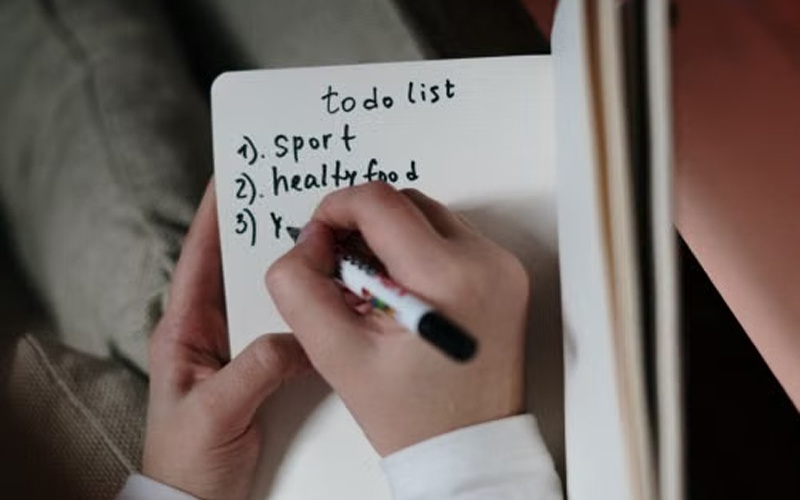
Photo by cottonbro studio: https://www.pexels.com/photo/person-writing-on-a-diary-3832031/